

Table Of Content
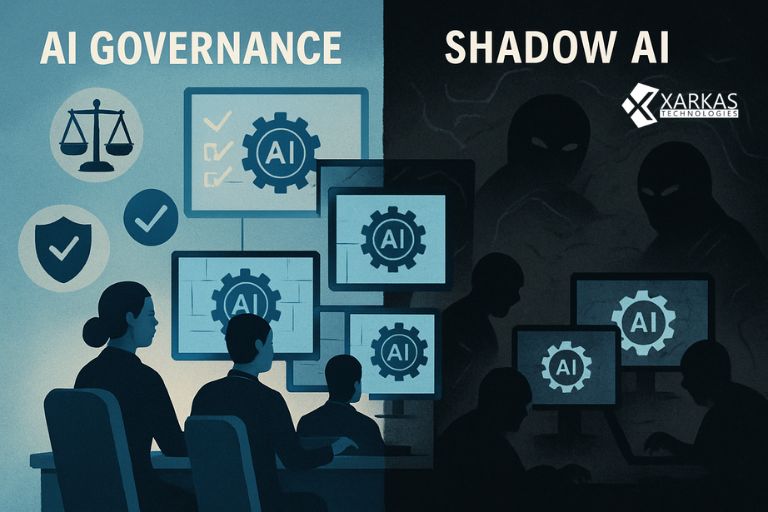
Artificial Intelligence (AI) has become a cornerstone of technological progress across industries, from healthcare and finance to defense and education. However, as AI systems become more complex and deeply integrated into our daily lives, AI governance and the rise of shadow AI are critical issues that demand urgent attention. Effective governance ensures accountability, transparency, and ethical alignment, while shadow AI poses risks due to its unmonitored and often unauthorized deployment.
In this article, we will explore the fundamentals of AI governance, the threats posed by shadow AI, and how organizations can create frameworks that foster innovation without compromising ethical and legal responsibilities.
Understanding AI Governance
AI governance refers to the framework of policies, rules, and best practices that regulate the development, deployment, and monitoring of AI technologies. Just as corporate governance safeguards financial and operational integrity, AI governance ensures that AI systems operate fairly, transparently, and safely.
Key components of AI governance include:
-
Ethical Standards: Ensuring fairness, accountability, and inclusivity in algorithmic decision-making.
-
Transparency: Making AI decision-making processes understandable to stakeholders.
-
Accountability: Clearly defining who is responsible when AI systems fail or cause harm.
-
Regulatory Compliance: Adhering to national and international laws surrounding data protection, privacy, and bias prevention.
-
Risk Management: Identifying and mitigating potential threats, including misuse or unintended consequences.
By establishing clear guidelines, organizations can ensure AI systems remain aligned with human values while driving innovation.
The Growing Concern of Shadow AI
While governance frameworks attempt to keep AI under control, shadow AI presents a hidden and dangerous challenge. Shadow AI refers to the use of AI tools, applications, or systems without official approval or oversight within an organization. Much like shadow IT, these unauthorized systems often arise when employees use AI-driven tools for productivity, data analysis, or decision-making outside official company policies.
Why Shadow AI Emerges
-
Accessibility of AI tools: With free and low-cost AI platforms available, employees bypass official channels.
-
Pressure for efficiency: Teams may deploy unapproved AI solutions to meet tight deadlines or boost performance.
-
Lack of awareness: Organizations without strict AI governance leave employees unaware of compliance risks.
Risks of Shadow AI
-
Data Security Threats: Sensitive organizational data may be exposed to unsecured third-party platforms.
-
Compliance Violations: Unauthorized AI usage can breach GDPR, HIPAA, or other privacy regulations.
-
Bias and Errors: Without oversight, AI may generate biased or misleading outputs that harm decision-making.
-
Reputation Damage: If shadow AI produces unethical or harmful outcomes, organizational credibility is at stake.
Shadow AI is not just a technology issue; it is a strategic risk that requires proactive governance and employee education.
Global Efforts in AI Governance
Governments, corporations, and academic institutions worldwide are actively working to standardize AI governance.
-
European Union (EU): The AI Act categorizes AI systems by risk level, enforcing strict rules for high-risk applications.
-
United States: Initiatives like the AI Bill of Rights aim to protect citizens from algorithmic discrimination and promote transparency.
-
China: Regulations emphasize state control, focusing on censorship, security, and algorithmic accountability.
-
OECD Principles: Promote human-centered AI, encouraging responsible innovation across member nations.
These frameworks highlight the global consensus that AI cannot exist in a regulatory vacuum. However, enforcement and adaptation remain challenges due to the rapid pace of AI innovation.
The Role of Ethics in AI Governance
Ethics must form the foundation of AI governance. Responsible AI requires organizations to integrate ethical principles into every stage of development and deployment.
Key ethical considerations include:
-
Bias Mitigation: Avoiding discrimination in AI-driven decisions affecting hiring, lending, or healthcare.
-
Explainability: Ensuring AI models can be interpreted by humans rather than functioning as “black boxes.”
-
Human Oversight: Guaranteeing that AI does not replace human judgment in high-stakes scenarios such as law enforcement or medical diagnosis.
-
Sustainability: Assessing the environmental impact of energy-intensive AI training processes.
Organizations that prioritize ethics are more likely to build trust with consumers, regulators, and stakeholders.
Strategies to Combat Shadow AI
To effectively counter the risks of shadow AI, organizations must develop comprehensive strategies that blend governance, technology, and culture.
-
Establish Clear Policies: Define acceptable use of AI tools, outlining what is approved and what is prohibited.
-
Educate Employees: Create awareness programs that inform staff about the risks of shadow AI and regulatory compliance.
-
Implement AI Auditing: Regularly monitor and audit AI usage across departments to detect unauthorized systems.
-
Deploy Secure AI Platforms: Provide employees with approved AI tools that balance efficiency and compliance.
-
Create Accountability Structures: Assign responsibility to AI governance boards or ethics committees to oversee usage.
By adopting these measures, organizations can prevent shadow AI from becoming an uncontrolled liability.
Balancing Innovation and Regulation
One of the greatest challenges in AI governance is striking a balance between fostering innovation and enforcing regulation. Excessive restrictions may slow progress, while insufficient oversight increases risk exposure.
Strategies to achieve this balance include:
-
Encouraging sandbox environments for safe AI experimentation.
-
Building cross-functional governance teams including technologists, legal experts, and ethicists.
-
Establishing risk-based governance models that prioritize oversight for high-risk AI applications while allowing flexibility for low-risk ones.
A well-balanced governance model creates an environment where AI innovation can thrive responsibly.
The Future of AI Governance and Shadow AI
The future of AI governance will be defined by collaboration, adaptability, and technological safeguards. As AI evolves, governance systems must become dynamic, capable of addressing new threats and opportunities. Shadow AI will remain a challenge as long as organizations fail to provide clear policies and approved tools that meet employee needs.
Emerging trends shaping the future include:
-
AI Governance Automation: AI-powered tools that monitor compliance and detect shadow AI in real time.
-
Standardization of Global Frameworks: International agreements on AI principles to ensure consistent regulation.
-
Integration of Blockchain in Governance: Using blockchain for traceability and accountability in AI decision-making.
-
Human-Centered Design: Building AI systems that prioritize human values, rights, and inclusivity at every stage.
Ultimately, organizations that embrace governance and tackle shadow AI head-on will be better positioned to leverage AI’s transformative potential responsibly.
Conclusion
AI governance and shadow AI represent two sides of the same coin: one promotes responsible innovation, while the other exposes organizations to hidden risks. To build trustworthy AI systems, organizations must establish governance frameworks that prioritize ethics, accountability, and transparency, while simultaneously addressing the dangers of unregulated shadow AI.
By aligning global regulations, ethical principles, and corporate responsibility, we can ensure that AI not only accelerates progress but also serves humanity responsibly and safely.




No Comment! Be the first one.