

Table Of Content
- Introduction to AI in Situational Awareness
- What is Situational Awareness?
- Why AI is Transforming the Concept
- The Three Levels of Situational Awareness
- Perception of the Environment
- Comprehension of the Situation
- Projection of Future Status
- Traditional Challenges in Achieving Situational Awareness
- How AI Empowers Situational Awareness
- AI’s Role in Data Collection and Integration
- Real-Time Data Processing Capabilities
- Pattern Recognition and Anomaly Detection
- Predictive Analytics for Decision-Making
- Technologies Driving AI-Enhanced Situational Awareness
- Machine Learning and Deep Learning
- Computer Vision for Environmental Perception
- Natural Language Processing (NLP) for Context Understanding
- IoT and Sensor Networks as Data Sources
- Applications Across Industries
- Defense and Military Operations
- Disaster Response and Emergency Management
- Transportation and Traffic Management
- Healthcare and Patient Monitoring
- Corporate Security and Risk Assessment
- Benefits of AI in Situational Awareness
- Faster Response Times
- Enhanced Accuracy and Reduced Human Error
- Scalability and Continuous Monitoring
- Improved Resource Allocation
- Ethical and Privacy Considerations
- Data Security and Privacy Risks
- Transparency and Accountability in AI Decisions
- Avoiding Over-Reliance on AI Systems
- Future Trends in AI-Driven Situational Awareness
- Integration with Augmented and Virtual Reality
- Edge AI for On-Site Intelligence
- Collaborative Human-AI Decision Systems
- Conclusion
- FAQs
Introduction to AI in Situational Awareness
Situational awareness is the ability to perceive, comprehend, and predict events in a given environment. It’s like having an extra set of eyes and ears, combined with a brain that never sleeps. Artificial Intelligence (AI) has transformed this concept from a reactive approach to a proactive, intelligent system capable of processing enormous amounts of data in real time.
What is Situational Awareness?
At its core, situational awareness is knowing what is happening, why it’s happening, and what will happen next. It’s essential in military, security, healthcare, and even everyday decision-making.
Why AI is Transforming the Concept
Before AI, situational awareness relied heavily on human observation and slow data analysis. Now, AI systems can integrate multiple data sources, process them instantly, and provide actionable insights.
The Three Levels of Situational Awareness
Perception of the Environment
This is the foundation — collecting information from the surroundings through sensors, cameras, and IoT devices.
Comprehension of the Situation
Here, data is analyzed to understand the meaning behind it. For example, detecting a traffic jam is not enough; AI interprets why it’s happening.
Projection of Future Status
AI uses predictive analytics to forecast future events, like anticipating a security breach before it happens.
Traditional Challenges in Achieving Situational Awareness
-
Data Overload: Too much data for humans to process in real time.
-
Limited Visibility: Incomplete or outdated information.
-
Slow Decision-Making: Delays in analysis can cost lives.
How AI Empowers Situational Awareness
AI’s Role in Data Collection and Integration
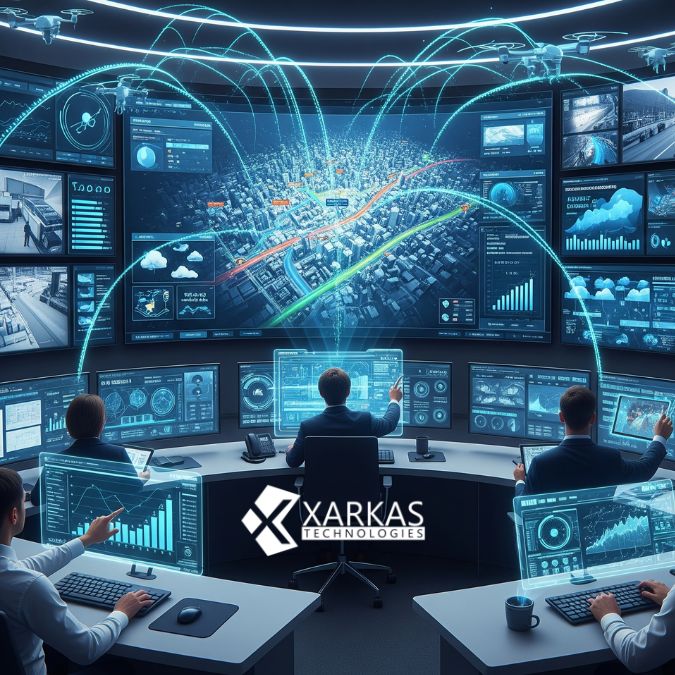
AI systems collect data from satellites, sensors, social media, CCTV, and GPS, then merge it into a unified view.
Real-Time Data Processing Capabilities
Unlike humans, AI doesn’t need breaks — it processes streams of information 24/7.
Pattern Recognition and Anomaly Detection
Machine learning algorithms can identify patterns, such as unusual movements in a crowd or suspicious financial transactions.
Predictive Analytics for Decision-Making
AI doesn’t just tell you what’s happening — it predicts what might happen next, allowing preventive action.
Technologies Driving AI-Enhanced Situational Awareness
Machine Learning and Deep Learning
These algorithms learn from data, improving over time without human intervention.
Computer Vision for Environmental Perception
Cameras and vision models detect objects, faces, and movements in real time.
Natural Language Processing (NLP) for Context Understanding
NLP helps AI understand and interpret human communication, from emergency calls to online chatter.
IoT and Sensor Networks as Data Sources
Billions of connected devices feed real-time information to AI platforms.
Applications Across Industries
Defense and Military Operations
AI aids in battlefield monitoring, threat detection, and mission planning.
Disaster Response and Emergency Management
AI can analyze satellite images to assess flood zones or predict wildfire spread.
Transportation and Traffic Management
Smart traffic systems use AI to reduce congestion and prevent accidents.
Healthcare and Patient Monitoring
Wearable devices send health data to AI systems for early detection of critical conditions.
Corporate Security and Risk Assessment
AI monitors networks for cyber threats and unusual behavior in physical security systems.
Benefits of AI in Situational Awareness
Faster Response Times
Quick detection means faster action.
Enhanced Accuracy and Reduced Human Error
AI minimizes mistakes caused by fatigue or oversight.
Scalability and Continuous Monitoring
Whether monitoring a small office or an entire city, AI scales effortlessly.
Improved Resource Allocation
AI ensures the right resources are deployed at the right time.
Ethical and Privacy Considerations
Data Security and Privacy Risks
Sensitive data must be encrypted and safeguarded.
Transparency and Accountability in AI Decisions
AI should provide explanations for its conclusions to build trust.
Avoiding Over-Reliance on AI Systems
Human judgment must remain a key part of decision-making.
Future Trends in AI-Driven Situational Awareness
Integration with Augmented and Virtual Reality
AR and VR can give decision-makers an immersive, real-time view of events.
Edge AI for On-Site Intelligence
Processing data closer to the source reduces latency.
Collaborative Human-AI Decision Systems
Humans and AI will increasingly work together for optimal decisions.
Conclusion
Artificial Intelligence is not just enhancing situational awareness — it’s revolutionizing it. From predicting natural disasters to preventing cyberattacks, AI gives us the tools to understand and act faster than ever before. The future lies in blending human intuition with AI’s precision.
FAQs
1. How does AI improve decision-making in critical scenarios?
AI processes vast data in seconds, providing actionable insights that humans can use to make quick, informed decisions.
2. Is AI in situational awareness only for military use?
No, it’s used in healthcare, transportation, disaster management, and corporate security as well.
3. What role do sensors play in AI-driven awareness?
Sensors act as the eyes and ears, collecting data for AI to process and analyze.
4. How is predictive analysis used in situational awareness?
It forecasts potential events, helping prevent incidents before they happen.
5. What is the future of AI in enhancing safety and security?
Expect deeper integration with AR/VR, edge AI, and more human-AI collaboration.





No Comment! Be the first one.