


Table Of Content
- 1. AI in Diagnostics: Faster, More Accurate Detection
- A. AI-Powered Medical Imaging
- B. Early Disease Prediction
- C. AI for Rare Diseases
- 2. AI in Treatment: Personalized Medicine & Robotic Surgery
- A. Personalized Treatment Plans
- B. Robotic Surgery Assistants
- C. AI Drug Discovery
- 3. AI in Patient Care: Virtual Nurses & Mental Health Support
- A. AI-Powered Virtual Nurses
- B. Mental Health AI Therapists
- C. Wearable AI Health Monitors
- 4. AI in Hospital Management & Administration
- A. AI for Staff Optimization
- B. Fraud Detection in Billing
- C. AI-Powered Electronic Health Records (EHR)
- 5. Ethical Challenges & Risks of AI in Healthcare
- 6. The Future of AI in Healthcare (2026 & Beyond)
- Conclusion: AI is the Future of Medicine
Introduction: The AI Revolution in Healthcare
Artificial Intelligence (AI) is no longer a futuristic concept—it’s actively reshaping healthcare in 2025. From early disease detection to personalized treatment plans, AI-powered tools are improving patient outcomes, reducing costs, and enhancing medical research.
This article explores the latest AI advancements in healthcare, including real-world applications, benefits, and ethical considerations. Whether you’re a medical professional, patient, or tech enthusiast, discover how AI is revolutionizing medicine in 2025.
1. AI in Diagnostics: Faster, More Accurate Detection
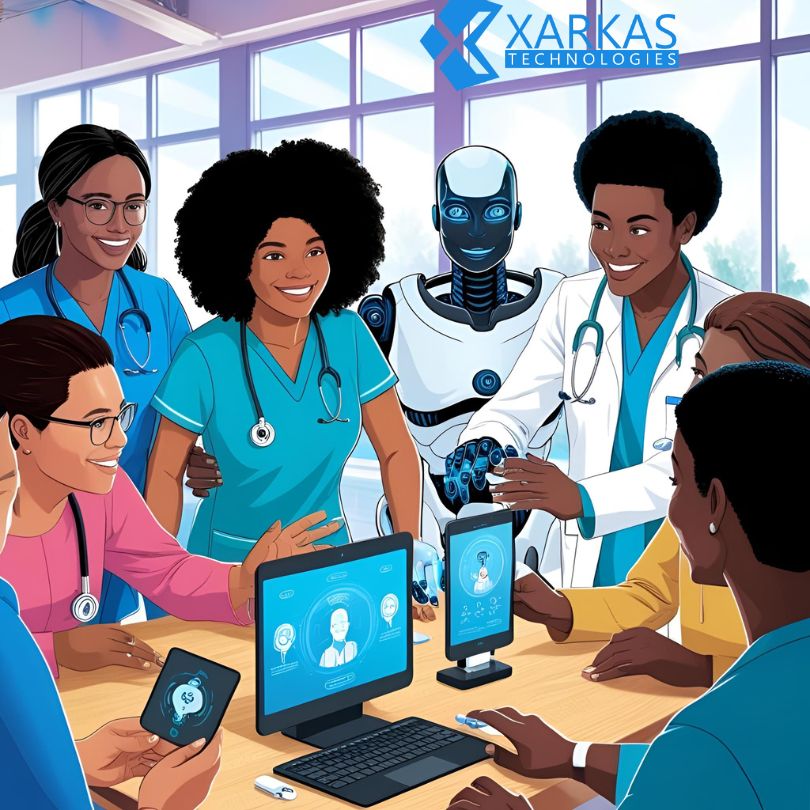
A. AI-Powered Medical Imaging
- Radiology & CT Scans: AI algorithms analyze X-rays, MRIs, and CT scans with 95%+ accuracy, detecting tumors, fractures, and anomalies faster than human radiologists.
- Example: Google’s DeepMind Radiology AI reduces diagnosis time for strokes by 50%.
B. Early Disease Prediction
- AI models predict diseases like cancer, diabetes, and Alzheimer’s years before symptoms appear.
- Example: IBM Watson’s AI risk assessment tool identifies high-risk patients using genetic and lifestyle data.
C. AI for Rare Diseases
- Platforms like FDNA use facial recognition AI to diagnose rare genetic disorders from patient photos.
2. AI in Treatment: Personalized Medicine & Robotic Surgery
A. Personalized Treatment Plans
- AI analyzes genetic data, medical history, and lifestyle to recommend tailored therapies.
- Example: Tempus AI provides personalized cancer treatment based on tumor DNA sequencing.
B. Robotic Surgery Assistants
- Da Vinci 5.0 (2025’s latest robotic surgeon) performs minimally invasive surgeries with sub-millimeter precision.
- AI reduces human error and improves recovery times.
C. AI Drug Discovery
- Companies like Insilico Medicine use AI to design new drugs in months, not years.
- Example: AI-discovered Alzheimer’s drug enters Phase 3 trials in 2025.
3. AI in Patient Care: Virtual Nurses & Mental Health Support
A. AI-Powered Virtual Nurses
- Chatbots like Sensely monitor patients post-surgery, reminding them to take medications and alerting doctors if complications arise.
B. Mental Health AI Therapists
- Woebot & Wysa provide 24/7 cognitive behavioral therapy (CBT) via AI chatbots.
- Example: Stanford’s AI therapist reduces depression symptoms by 30% in clinical trials.
C. Wearable AI Health Monitors
- Apple Watch 2025 detects early signs of heart disease, seizures, and sleep disorders.
4. AI in Hospital Management & Administration
A. AI for Staff Optimization
- Predictive AI schedules staff shifts based on patient inflow forecasts, reducing ER wait times.
B. Fraud Detection in Billing
- AI flags fraudulent insurance claims, saving hospitals $200B+ annually.
C. AI-Powered Electronic Health Records (EHR)
- Nuance DAX AI automates clinical notes, saving doctors 2+ hours daily.
5. Ethical Challenges & Risks of AI in Healthcare
| Challenge | Risk | Solution |
|---|---|---|
| Data Privacy | Patient records hacked | Blockchain-secured AI |
| Algorithm Bias | AI favors certain demographics | Diverse training data |
| Over-reliance on AI | Doctors may miss errors | AI as assistant, not replacement |
6. The Future of AI in Healthcare (2026 & Beyond)
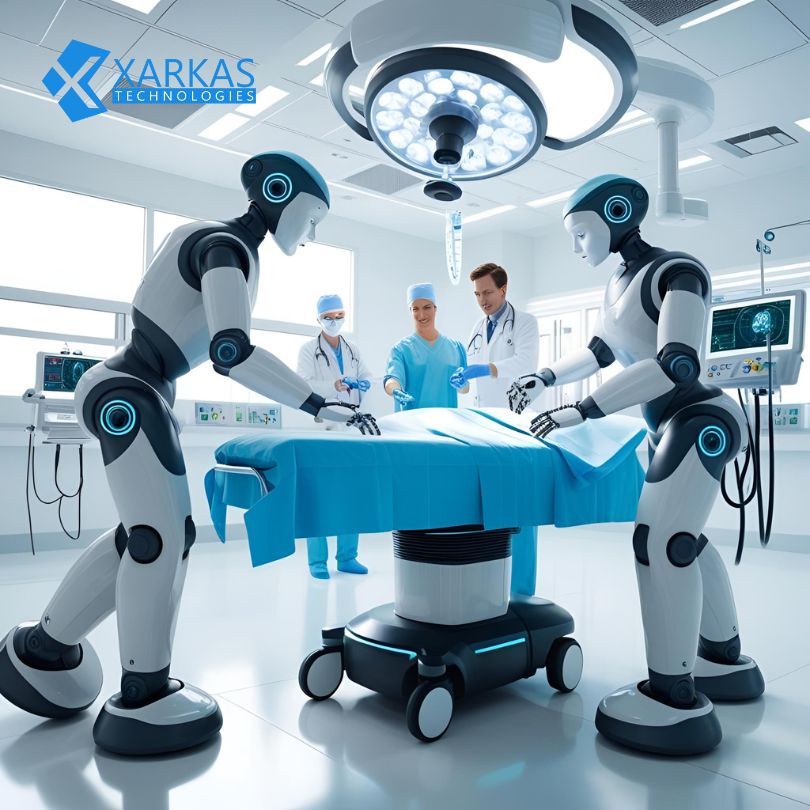
- Nanobot AI for targeted drug delivery
- Brain-Computer Interfaces (BCIs) for paralysis patients
- AI-powered pandemic prediction
Conclusion: AI is the Future of Medicine
AI in 2025 is saving lives, cutting costs, and making healthcare more accessible. While challenges remain, the benefits—faster diagnoses, personalized treatments, and AI-assisted surgeries—are undeniable.
How do you think AI will change healthcare next? Share your thoughts below!


No Comment! Be the first one.